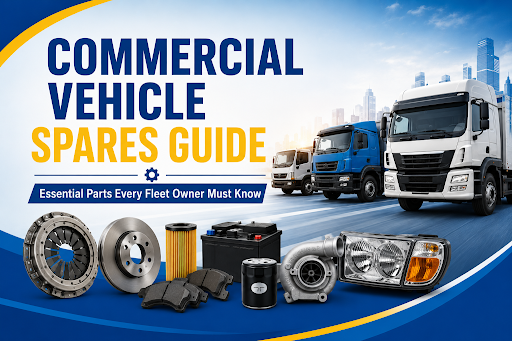


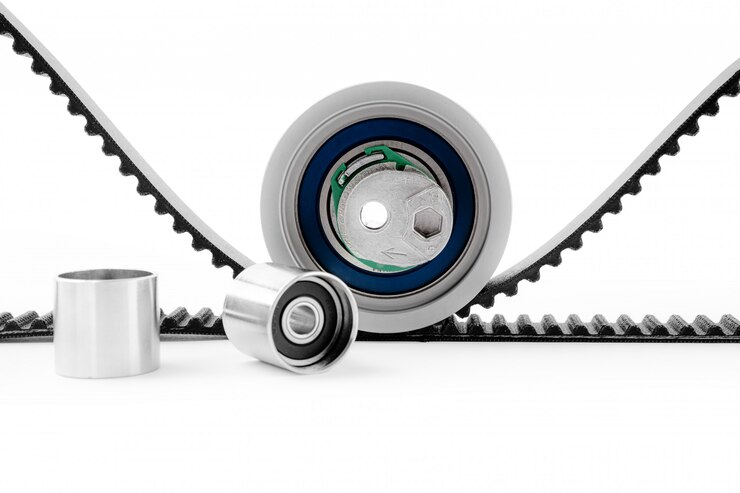
OEM vs. Aftermarket Spare Parts: What’s Best for Your Commercial Vehicle?

by | Jan 14, 2025 | Blog

Are you unsure whether to choose Original Equipment Manufacturer (OEM) or aftermarket spare parts to maintain your commercial vehicle’s reliability and performance? This decision plays a crucial role in ensuring your vehicle operates smoothly, and both options come with their unique advantages. Understanding the differences between OEM and aftermarket parts is key to making informed choices that suit both your vehicle and your budget. In this blog, we’ll explore the nuances of these options to help you determine the best fit for your needs in the context of spare parts in India.

What Are OEM Spare Parts?

OEM spare parts are made by the same companies that manufacture the original parts for your commercial vehicle. These components are designed, constructed, and tested to meet the vehicle’s OEM specifications and performance standards. These parts are popularly used to repair the damage to vehicle components due to their quality.

When using OEM parts, you can expect uniform quality that went through tests and strict manufacturing controls of the supplier. It is highly reliable for commercial vehicles that work under severe service conditions. OEM parts may cost a bit more but they sure bring peace of mind. After all, they are a long-term investment into your vehicle’s health.

What Are Aftermarket Spare Parts?

Aftermarket spare parts are manufactured by third-party companies that are not affiliated with the original vehicle manufacturer. These parts are designed to function as replacements for OEM components, often at a lower cost. The aftermarket industry in spare parts in India is vast, offering a wide range of options that cater to different budgets and requirements.

While aftermarket parts can be cost-effective, their quality may vary significantly depending on the manufacturer. Some aftermarket parts are designed with exceptional attention to detail and can rival OEM parts in terms of performance. However, others might compromise on quality to reduce costs, which could affect your vehicle’s overall reliability.

Compatibility and Performance: A Key Consideration

One of the primary distinctions between OEM and aftermarket spare parts lies in compatibility. OEM parts are tailored to fit specific vehicle models, ensuring flawless integration with the existing components. This level of compatibility minimizes the risk of installation errors or functional discrepancies, making them ideal for maintaining the performance of your commercial vehicle.

Aftermarket parts, on the other hand, might not always offer the same level of precision. While many third-party manufacturers produce high-quality components, there’s a chance of encountering parts that lack exact specifications, leading to potential issues during installation or operation.

Cost vs. Value: Evaluating the Trade-Off

Cost is often a deciding factor when choosing between OEM and aftermarket spare parts. While OEM parts are generally more expensive, their superior quality and reliability often translate to better value over time. These parts are designed to last, reducing the likelihood of frequent replacements and minimizing downtime for your commercial vehicle.

Aftermarket parts are typically more budget-friendly, making them an attractive option for those seeking immediate cost savings. However, the lower price point may come with compromises in durability and performance, potentially leading to higher expenses in the long run due to frequent repairs or replacements. For those operating fleets, the reliability of parts can have a direct impact on operational efficiency, making quality a crucial consideration.

Availability and Variety in Spare Parts India

The availability of spare parts is another significant factor to consider. OEM parts are often available through authorized dealerships and distributors, ensuring authenticity and quality. However, the procurement process for OEM parts might take longer, mainly if the part is not readily available in stock.

Aftermarket parts are widely accessible, thanks to the extensive network of third-party manufacturers in spare parts India. This abundance of options means you’re more likely to find a part quickly, which can be particularly beneficial in time-sensitive situations. However, it’s essential to verify the credibility of the supplier to ensure you’re purchasing high-quality components.

Making the Right Choice for Your Commercial Vehicle

When deciding between OEM and aftermarket spare parts, consider the specific needs of your commercial vehicle. Factors such as the type of part required, the vehicle’s operating conditions, and your budget should all play a role in the decision-making process.

Investing in OEM parts is often the best choice for critical components that directly impact the vehicle’s performance and safety. Their reliability and precision ensure that your vehicle operates at its peak, minimising risks and downtime.

However, high-quality aftermarket parts can be a viable alternative for less critical components or instances where cost savings are a priority. By sourcing parts from reputable manufacturers, you can balance affordability and performance.

Whether you opt for OEM or aftermarket parts, prioritizing regular maintenance and timely replacements is key to extending the life of your commercial vehicle. Ensuring that your vehicle receives the care it needs will save you money in the long run and enhance its reliability and efficiency.

By carefully evaluating your options and considering the specific requirements of your vehicle, you can make informed decisions that contribute to its longevity and optimal performance. Choose wisely and keep your commercial vehicle running smoothly, no matter the road ahead.
All Blogs
Blog
Understanding Tata Genuine rubber parts labels and specifications is essential for ensuring the right fit, durability, and performance of Tata commercial vehicles. Rubber components such as hoses, mountings, bushes, seals, and gaskets play a critical role in vibration control, sealing, and long-term reliability. For fleet owners, mechanics, and procurement teams, knowing how to decode these labels helps in selecting authentic parts that match Tata Motors’ engineering standards. At TGP India, we believe that informed decisions lead to improved vehicle uptime and optimized maintenance planning. This guide explains how to read rubber part labels clearly and confidently.

Why Rubber Part Labels Matter in Tata Commercial Vehicles

Rubber parts are designed to perform under varying load conditions, temperatures, and operating environments. Each label provides essential technical information that ensures compatibility with specific Tata truck and bus models. Using Tata Genuine rubber parts supports consistent performance, correct fitment, and extended service life across commercial vehicle applications. Proper label interpretation also supports inventory accuracy and smooth service operations.

Key Elements Found on Tata Rubber Part Labels

1. Part Number

The part number is the most important identifier on any rubber component. It links the part to a specific Tata commercial vehicle model or system. Matching the correct part number ensures accurate fitment and seamless installation. Always cross-check the part number with the official Tata parts catalogue or the TGP India product listings.

2. Material Composition Code

Rubber part labels include material codes such as:
These codes indicate resistance levels to heat, oil, chemicals, and environmental conditions. Tata Genuine rubber parts use materials selected to meet OEM durability standards.

3. Hardness Rating (Shore Value)

The Shore hardness value defines the flexibility or firmness of the rubber part. Softer rubber absorbs vibrations, while firmer rubber supports load-bearing functions. Tata-approved hardness ratings ensure balanced performance and ride comfort.

4. Manufacturing Date and Batch Code

The manufacturing date and batch number help track production quality and storage timelines. Freshly manufactured rubber parts retain optimal elasticity and sealing performance, making this information valuable during procurement and stock management

5. Application or Vehicle Model Reference

Many labels specify the intended application, such as engine mounts, suspension bushes, or cooling system hoses. Some also mention compatible Tata vehicle series. This helps technicians select the right part quickly and accurately.

How to Match Rubber Part Specifications with Tata Vehicle Requirements

Refer to OEM Documentation

Always compare label details with Tata Motors’ technical manuals or trusted suppliers like TGP India. This ensures alignment with vehicle design and operational demands.

Check Environmental Compatibility

Select rubber parts based on operating conditions such as temperature exposure, oil contact, and load cycles. Tata Genuine rubber parts are engineered for Indian road and climate conditions.

Inspect Packaging and Branding

Authentic rubber parts come with clear labeling, consistent fonts, and proper branding. TGP India supplies verified products sourced through authorized channels.

Common Rubber Parts Used in Tata Commercial Vehicles

  • Suspension bushes
  • Engine and gearbox mountings
  • Radiator and coolant hoses
  • Door and window seals
  • Gaskets and vibration dampers
Each of these components carries unique label specifications designed for its functional role.

Benefits of Choosing Tata Genuine Rubber Parts from TGP India

  • Accurate fitment across Tata commercial vehicle models
  • Long-term durability under heavy-duty usage
  • Reliable vibration control and sealing efficiency
  • Consistent quality backed by OEM standards
By selecting Tata Genuine rubber parts, fleet operators and workshops support efficient maintenance practices and vehicle longevity.

Conclusion

Reading and understanding rubber part labels is a practical skill that ensures the correct selection of components for Tata commercial vehicles. From part numbers and material codes to hardness ratings and application details, every specification serves a purpose. TGP India remains committed to supplying high-quality Tata Genuine rubber parts that meet exact OEM requirements and support dependable vehicle performance. Looking for authentic Tata Genuine rubber parts with verified specifications? Explore our complete range at TGP India
Blog
When it comes to dependable braking performance in commercial vehicles, tata genuine break pads play a vital role in ensuring smooth stopping power, consistent control, and long-term driving confidence. Tata trucks operate across diverse road conditions, load capacities, and driving cycles, which makes selecting the right brake pad type extremely important for overall vehicle efficiency. At TGP India, we understand how critical friction components are for fleet owners, transporters, and service professionals. This guide explains the types of brake pads used in Tata trucks, their applications, and how genuine components support performance consistency across mileage cycles.

Why Brake Pad Selection Matters for Tata Trucks

Brake pads convert kinetic energy into controlled friction, enabling safe and predictable deceleration. For Tata commercial vehicles, brake pads are engineered to match axle load, braking force, and thermal requirements. Choosing tata genuine break pads ensures:
    • Stable braking response across operating conditions
    • Controlled heat dissipation during long hauls
    • Uniform wear for predictable service intervals
  • Compatibility with Tata braking systems

Common Types of Brake Pads Used in Tata Trucks

Each brake pad category serves a specific operational requirement. Below is a detailed explanation of the most commonly used brake pads in Tata commercial vehicles.

1. Organic Brake Pads

Designed for smooth and controlled braking applications Organic brake pads are manufactured using natural fibers combined with resins and fillers. These pads offer consistent braking feel and are suitable for light-to-medium duty Tata trucks used in city operations. Key characteristics include:
  • Gentle braking response suitable for urban routes
  • Balanced noise and vibration control
  • Even contact with brake discs and drums
Organic variants of 
tata genuine break pads are commonly used in light commercial vehicles where comfort and daily drivability are priority factors.

2. Semi-Metallic Brake Pads

Engineered for durability and higher load handling Semi-metallic brake pads contain a blend of metal fibers, bonding agents, and friction modifiers. These pads deliver stronger braking force and are widely used in medium and heavy Tata trucks. Key characteristics include:
  • Enhanced heat resistance during long-distance driving
  • Stable braking under frequent stop-and-go conditions
  • Improved performance for higher payload vehicles
TGP India supplies tata genuine break pads in semi-metallic variants that align with factory braking standards for consistent fleet performance.

3. Ceramic Brake Pads

Optimized for cleaner operation and refined braking Ceramic brake pads are manufactured using ceramic compounds and fine copper fibers. They provide controlled friction and maintain braking efficiency over extended service cycles. Key characteristics include:
  • Stable braking feel across temperature ranges
  • Reduced brake dust generation
  • Smooth engagement with brake components
Certain Tata truck applications benefit from ceramic-based tata genuine break pads, especially where refined braking control and cleaner operation are preferred.

4. Non-Asbestos Organic (NAO) Brake Pads

Developed for balanced braking efficiency NAO brake pads use advanced fiber technology without asbestos. These pads are engineered to offer stable braking and controlled wear patterns. Key characteristics include:
  • Uniform braking response
  • Improved compatibility with brake rotors
  • Consistent friction levels
NAO-based tata genuine break pads are suitable for varied operating conditions where reliability and balance are key considerations.

5. Heavy-Duty Brake Pads for Tata HCVs

Built for demanding commercial operations Heavy-duty brake pads are specifically designed for Tata heavy commercial vehicles that operate under high load, long routes, and frequent braking cycles. Key characteristics include:
  • High thermal stability for extended braking
  • Strong friction coefficient for controlled stopping
  • Long operational life under heavy usage
TGP India offers tata genuine break pads engineered to meet the braking demands of Tata HCV platforms used in logistics, construction, and intercity transport.

How Tata Genuine Brake Pads Support System Compatibility

Brake pads work in coordination with discs, drums, calipers, and braking hydraulics. Using genuine components ensures system harmony and predictable braking behavior. Benefits include:
  • Correct material pairing with OEM brake components
  • Controlled wear of related braking parts
  • Consistent pedal feel across service intervals
This is why fleet operators prefer tata genuine break pads sourced through authorized distributors like TGP India.

Tips for Choosing the Right Brake Pad for Your Tata Truck

Before selecting brake pads, consider the following factors:
  • Vehicle category: LCV, MCV, or HCV
  • Operating route: City, highway, or mixed terrain
  • Load pattern: Light, medium, or continuous heavy load
  • Service cycle: Regular maintenance intervals
Selecting the appropriate tata genuine break pads helps maintain braking consistency and overall vehicle efficiency.

Why Choose TGP India for Tata Brake Pads

TGP India supplies a wide range of frictional parts that align with Tata Motors specifications. With a focus on quality sourcing and application accuracy, TGP India supports transporters, workshops, and fleet owners with dependable components. Advantages of sourcing from TGP India include:
  • Wide product availability across Tata platforms
  • Application-specific brake pad options
  • Trusted support for commercial vehicle requirements

Conclusion: Reliable Braking Starts with the Right Choice

Understanding the types of brake pads used in Tata trucks helps fleet operators make informed maintenance decisions. From organic and semi-metallic to ceramic and heavy-duty options, each brake pad type serves a defined purpose. By choosing tata genuine break pads from TGP India, operators support braking consistency, system compatibility, and dependable vehicle performance across operating conditions. Looking for the right tata genuine break pads for your Tata truck? Explore TGP India’s complete range of frictional parts today.
Blog
The demand for commercial vehicles in India is steadily rising. With this growth comes an increased need for regular maintenance and repairs. Choosing the right replacement parts for trucks, buses, or construction vehicles is essential to keep them operating efficiently. However, the Indian spare parts market can be overwhelming. Not every product available is reliable or even safe. To ensure long-term performance and safety of Tata Motors commercial vehicles, selecting only genuine spare parts in India is the first and most crucial step.

Navigating the Maze of Parts Sellers

Finding genuine parts in a crowded market can be confusing. The number of suppliers for items like engine parts, frictional parts, lubricants, and transmission parts is always increasing.
  • Many sellers may claim their parts are genuine, but look similar only on the outside.
  • Counterfeit parts often use substandard materials and lack important quality checks.
  • For essential elements such as connecting rods, cylinder blocks, crankshafts, brake drums, fuel filters, and oil pumps, quality should be the main priority.
  • Choosing fake components may save money at first but can result in frequent breakdowns and even put vehicle safety at risk.
When choosing parts, always check the packaging, holograms, and manufacturer’s stamps. Trusted sources will also offer proof of authenticity, including bills or certificates. These small steps can save you future trouble. Always look for reliable dealers who have been authorized by Tata Motors.

Understanding OEM Standards

Genuine spare parts are made according to strict Original Equipment Manufacturer (OEM) standards.
  • OEM parts are specifically designed for your Tata commercial vehicle’s model and function.
  • For example, items such as air compressors, cam shafts, timing gears, engine gaskets, clutch plates, and steering assemblies must precisely fit and function as intended.
  • Unlike generic alternatives, OEM parts go through rigorous testing that ensures they can handle heavy usage and harsh road conditions.
  • When you opt for certified spare parts in India, you help keep your vehicle’s warranty valid and avoid unnecessary risks on the road.

The Cost Factor and Long-term Savings

Sometimes, the initial price of genuine parts may seem high. However, cheaper, non-genuine parts often do not last as long and can cost more in repeated repairs and downtime.
  • Real engine bearings, oil filters, water pumps, and gear kits have a longer lifespan. This means fewer replacements and less vehicle downtime.
  • The cost of a breakdown on the highway, lost delivery time, or towing is often much more than the money saved by buying a fake or substandard part.
  • Regular use of OEM lubricants like coolant, DEF, or steering oil also protects your vehicle’s engine and systems.
  • By focusing on genuine products, owners and fleet managers see savings in both money and time over the life of the vehicle.

Where to Source Genuine Spare Parts

With so many suppliers in India, it’s important to choose trustworthy dealers.
  • Avoid buying from roadside shops or unknown online sellers.
  • Always check for authorized dealership status. This is often displayed on the storefront or on bills.
  • Authorised dealers will supply parts such as axle bearings, engine overhauling kits, halogen bulbs, king pins, propeller shaft components, and genuine DEF for emission control.
  • They provide full customer support, fitting guidance, and after-sales service.

Real-Life Impact of Using Genuine Spares

The use of authentic parts directly affects the safety, efficiency, and lifespan of commercial vehicles.
  • Better quality materials mean fewer breakdowns.
  • Vehicles use less fuel and experience improved performance with high-quality air filters, fuel filters, and engine fans.
  • Safety features are maintained with correct brake drums, clutch facings, and suspension parts.
  • Original filters and electricals ensure smooth and reliable journeys for your drivers and cargo.

Sustainable Practices and Emission Control

With changing regulations, many Tata commercial vehicles are equipped with emission control systems.
  • Tata Motors Diesel Exhaust Fluid (DEF) is specifically designed for trucks and buses with BS4 and BS6 engines.
  • Using the correct DEF not only protects your Selective Catalytic Reduction (SCR) technology but also ensures you meet Indian emission standards.
  • ISO 22241 approved DEF from authorized dealers is safer for both your vehicle and the environment.

Making an Informed Decision

Buying genuine spare parts in India is more than a purchase—it is an investment in your vehicle’s future. The right choice means fewer delays, safer roads, and better business outcomes. When looking for replacement parts, always look for authenticity. Cross-check part numbers, insist on original packaging, and only trust authorized sources. Reliable parts support vehicle health, reduce downtime, and enhance safety for everyone on the road. For those seeking long-term sustainability and trust, sourcing authentic engine, transmission, and emission control parts remains the smart choice. The reputation of dependable commercial vehicles in India continues to be linked with those who choose wisely in the maintenance journey. One such trusted name, Tata Genuine Parts, consistently delivers reliable solutions and quality, supporting Tata Motors commercial vehicles across the country.
Load More