


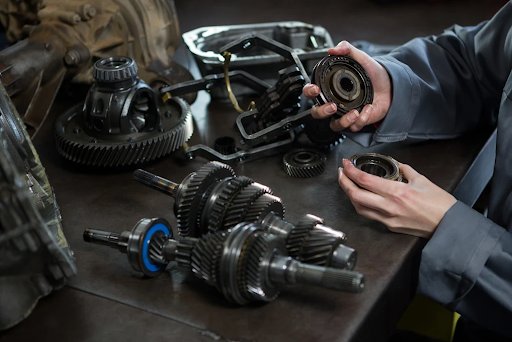
Top-Selling Automotive Engine Parts for Commercial Vehicles in 2026

by | Mar 19, 2026 | Blog

The commercial vehicle market is undergoing rapid change in 2026, influenced by efficiency needs, emission regulations, and reduced vehicle downtime. The foundation of any successful vehicle fleet is the reliability of engine parts. These components are critical to vehicle performance, fuel efficiency, and cost savings. Therefore, for fleet owners and transportation businesses, purchasing engine components is not only about replacing them; it is an investment strategy.

Why Engine Reliability Matters More Than Ever :

Today’s commercial vehicles are subject to extreme operating conditions, covering vast distances, carrying heavy loads, and driving on diverse terrain. Therefore, any component failure causes a ripple effect on vehicle operations, resulting in higher costs. As a result, there has been a huge rise in demand for reliable and high-quality engine components.

In 2026, buyers are looking for:

  • Longer product life
  • Compatibility with new engine technology
  • Compliance with BS6 and upcoming emission regulations
  • Ease of availability to support faster replacement cycles

All these factors have influenced the list of top-selling products in the industry.

The Role of Preventive Maintenance in Part Longevity

Preventive maintenance is one area that fleet operators are focusing on in 2026. Instead of relying on parts breaking down before they can be replaced, businesses are adopting a schedule to service parts on time. This not only helps in minimizing breakdowns but also helps in increasing the lifespan of parts.

By constantly monitoring parts such as lubrication levels and coolants, businesses can ensure that parts are functioning efficiently in difficult conditions.

Most In-Demand Automotive Components in 2026

There are some products that have been at the top in terms of sales due to their importance in the engine and the frequency of replacement.

Pistons and Piston Rings :

Pistons are one of the most commonly replaced engine parts, as they are always exposed to extreme temperatures. High-quality piston rings help in maintaining engine efficiency by preventing oil leakage.

Fuel Injectors :

Due to the widespread use of modern engine technology, fuel injectors have become important engine parts. They help in maintaining fuel spray, which is important to increase the engine’s fuel efficiency.

Crankshafts : 

Crankshafts play a vital role in the engine, as they convert the motion into rotational motion. The quality of the crankshaft is important to increase the stability of the engine.

Cylinder Liners : 

The cylinder liners provide protection to the engine block from wear and tear. They are more preferred for fleet maintenance cycles because of their replaceability.

Gaskets and Seals : 

The gaskets and seals are usually not given much attention; however, they are critical for avoiding leaks and maintaining pressure within the engine. Their contribution to avoiding breakdowns is considered a regular purchase for fleet managers.

Mid-Segment Insights: What Drives Bulk Purchases

Fleet managers are increasingly purchasing in bulk based on performance. There is a change in focus from short-term benefits to long-term benefits.

In this regard, the engine parts are considered for purchase not only for their price but also for their:

  • Durability with continuous use
  • Reliability of the manufacturer
  • Availability at multiple locations
  • Warranty provided

Another trend being witnessed is the preference for standardized components that can be fitted to multiple vehicle types.

Technology Trends Influencing Demand : 

The increasing trend of smart diagnostics and telematics has also impacted the selection and replacement of parts. This is because, with the help of predictive maintenance, it is possible to know that a part will fail before it actually does. This, in turn, will create a greater demand for ready-to-ship parts.

Key technology trends that are currently impacting the selection of parts are as follows:

  • Sensors that are integrated into the engine of the vehicle
  • Real-time monitoring of the vehicle’s performance
  • Data-based scheduling of maintenance

These are some of the technology trends that have impacted the selection of parts.

Growing Demand in Tier 2 and Tier 3 Markets : 

Another change that is being witnessed in the commercial vehicle space is the increased requirement for automotive components in Tier 2 and Tier 3 cities. With the development of infrastructure and expansion of logistics services to these cities, there is a significant increase in the requirement for these components.

There is a strong sense of awareness among local workshops and fleet owners to access quality components that were previously only accessible in metropolitan cities. This is having a positive impact on suppliers to develop their distribution capabilities to cater to diverse locations.

Factors Fleet Owners Should Consider : 

Choosing the correct automotive parts involves more than just selecting the correct part. Here are some of the factors that fleet owners should take into account while selecting the correct part for their vehicles.

  • Quality Certification: The components should adhere to industry quality and compliance standards
  • Compatibility: Always check with vehicle models and engine types
  • Strength of the Supply Chain: The supply of components should not create downtime
  • Cost vs. Value: Low-cost components might translate into higher costs down the line
  • Technical Support: Access to expert advice will aid better decision-making

Balancing these factors will help maintain efficiency with reduced downtime.

The Shift Toward Trusted Suppliers : 

Businesses in 2026 will increasingly depend on trusted suppliers who can provide consistent quality components with technical support. The focus will be on developing long-term relationships with suppliers, not just buying from them.

A trusted supplier will typically offer:

  • Wide product range across categories
  • Consistent quality checks
  • Strong distribution network
  • Industry expertise and guidance

There has been a growing awareness of the importance of quality components, which will have a direct bearing on the profitability of a fleet.

Keeping Fleets Running Strong in 2026

With an increasingly demanding environment in the commercial vehicle industry, engine efficiency is no longer a choice but a necessity. Making investments in quality engine parts is not only important but also a necessity for smooth operations.

From our point of view, serving the needs of the industry with quality and reliability is what we are built upon. Today’s businesses are also in an active search to find answers to their needs with terms like automotive parts supplier, commercial vehicle parts online, heavy-duty engine components, and truck engine parts in India. These are clear indications of the importance of reliability in this industry.

For those looking to align performance with reliability, TGP India stands out as a dependable choice, offering a comprehensive range of solutions tailored to the needs of today’s commercial vehicles.

All Blogs
Blog
When it comes to upgrading or adding accessories to a vehicle, one needs to remember that safety and compliance should always be a top concern. This is where Tata Motors' genuine accessories come in, which promise a guarantee that all parts and accessories are compliant with strict regulatory requirements and have been tested for durability, compatibility, and performance. Automotive accessories, ranging from seat covers to electrical accessories, need to conform to industry norms set on the quality of materials used, fire resistance, and environmental friendliness. While such accessories may appear to be inexpensive, non-compliant accessories may cause problems in the long run.

Key Safety Standards to Look For : 

Knowing and understanding compliance standards is an important aspect of ensuring that a vehicle owner or fleet operator is able to make informed decisions regarding their vehicles. A reliable platform such as TGP India provides valuable information on where to get automotive parts that comply with strict regulatory standards. Some of the key safety standards to look out for include:
  • Material Quality Certification: This process ensures that the quality of the materials used for the accessories is good and non-toxic.
  • Fit and Compatibility Testing: This process ensures that the parts fit perfectly with the chosen models of the vehicles.
  • Electrical Safety Checks: This process prevents short circuits and electrical damage.
  • Environmental Compliance: This process ensures that the company complies with environmental regulations.
It is not just the technical specifications that matter here; it is the direct implications for the safety of the people and the goods being transported.

The Role of Authentic Sourcing : 

It is a known fact that sourcing the right parts from the right people plays a vital role in the whole process of compliance. Tata Motors' genuine accessories are sourced from authorized dealerships that follow a strict quality control policy. Platforms such as TGP India help facilitate the process and provide the right parts for the right vehicles. Additionally, proper installation is also equally important. Even a certified accessory may not conform to safety standards if it is not installed properly. Hence, proper installation is strongly recommended.

Ensuring Long-Term Reliability Through Smart Choices : 

Compliance is not a one-time activity; rather, it is a process that needs to be continued in order to meet safety and performance standards. Therefore, by opting for Tata Motors' genuine accessories, vehicle owners can be assured of quality, lower maintenance risks, and better resale value. As the industry continues to evolve, understanding concepts like automotive safety standards, vehicle compliance regulations, OEM car accessories, and certified auto parts in India can help vehicle owners make more informed and responsible decisions while keeping safety at the forefront.
Blog
For transport businesses, vehicle uptime is immediately linked to profitability. Every single hour that the vehicle is out of service means loss of income and delayed business operations. This is where Tata genuine parts play a crucial role, as they are able to provide support to vehicle operators in their quest to maintain performance and minimize the risk of vehicle failure.

Built for Precision and Compatibility : 

One of the major reasons why genuine parts are able to provide support to transport organizations is their precision engineering. Unlike other parts, genuine parts are built to precise vehicle specifications. This means that there is:
  • Seamless fitting and installation
  • Minimization of wear and tear on other connected parts
  • Perfect performance of the vehicle
When the parts perfectly fit the original system, the likelihood of malfunction is significantly low. This reduces the need for frequent repairs and keeps the vehicle running for longer periods.

Reduced Breakdown Frequency : 

Frequent breakdowns may interfere with logistics schedules and affect business credibility. Using quality parts ensures that the vehicle functions well even in adverse weather and driving conditions, such as transporting goods over long distances. During the middle of operations, using Tata genuine parts offers several advantages, including:
  • Resistance to heat and friction
  • Long intervals between services
  • Efficient performance of the engine
The above advantages are crucial in reducing the frequency of breakdowns, enabling transport businesses to deliver goods as scheduled.

Better Lifecycle Value : 

Although genuine parts may be more expensive, their life cycle offers more value to the business. The parts are more durable and less likely to need frequent replacements. The key advantages of using genuine parts, as opposed to non-genuine ones, are as follows:
  • Lower maintenance costs
  • Lower labor costs
  • Higher resale value
Transport businesses are usually run on low margins, and the avoidance of recurring expenses can make a huge difference in the profitability of the business.

Improved Safety and Compliance : 

While vehicle uptime mainly focuses on the movement of vehicles, it also includes safety and compliance. Low-quality vehicle parts may cause failure, thereby compromising the safety and security of the vehicle. Using genuine vehicle parts provides an additional level of reliability. This provides many advantages to transport businesses, such as:
  • Improved compliance with transport regulations
  • Improved safety while driving
  • Avoiding penalties and operational disruptions
This provides an additional level of reliability to vehicle uptime.

Availability and Support Network : 

Another major factor that provides vehicle uptime comes from the availability and support network. A strong support network provides easy access to vehicle parts. With the availability and support network, transport businesses can:
  • Procure vehicle parts in case of emergencies
  • Reduce waiting time for vehicle parts
  • Ensure consistent performance of the fleet
This accessibility is very important in ensuring that idle time is reduced to a bare minimum.

Keeping Fleets Moving Without Disruption : 

For a competitive and dynamic industry like the transport business, consistency and reliability are the key factors that help businesses run smoothly and gain the confidence of their clients and customers. Thus, the need for consistent and reliable parts arises for businesses that look forward to a smoother and more efficient running of their operations with the help of Tata genuine parts. From the perspective of TGP India, the focus is always on helping businesses make the right decisions about the maintenance and use of parts for their operations. When combined with proper and effective fleet management strategies and techniques, the use of quality parts is a great advantage for businesses that look forward to the long-term and stable running of their operations with the help of options like commercial vehicle spare parts, truck maintenance solutions, fleet management systems, heavy-duty engine parts, and OEM quality auto parts.
Blog
The move towards more stringent emission norms like BS6 has been a major game-changer for the Indian automobile industry. One of the most significant changes has been the increased demand for automotive engine components as companies move toward cleaner, more efficient engines. These regulations, implemented to minimize pollution caused by vehicles on the roads, not only rewrote the way automobile engines are made but also rewrote the entire supply chain for automobile engine parts in their entirety.

Understanding BS6 and Its Technical Implications : 

The BS6 emission standards are regulations that are intended to reduce the emission of pollutants like nitrogen oxides and particulate matter. BS6 emission standards are more advanced in terms of engine technology and engineering skills when compared to BS4 emission standards. This has led to:
  • Increased usage of fuel injection systems rather than carburetors
  • Inclusion of exhaust after-treatment systems like Diesel Particulate Filters (DPF)
  • Improvement in electronic control units (ECU) for real-time monitoring
Thus, the traditional engine parts are being replaced or upgraded to fulfill these stringent needs.

Shift in Demand for Engine Components : 

The implementation of BS6 has had a direct influence on the demand for different engine parts. The focus now is on high-performance engine components rather than traditional ones. The changes that have been witnessed in the market for engine components are as follows:
  • Rise in the demand for high-performance fuel systems: High-pressure fuel pumps and injectors are now a necessity
  • Growth in the demand for sensor-based components: Oxygen sensors, NOx sensors, and temperature sensors are now in higher demand
  • Decline in the traditional components: The traditional engine components that were a part of the older combustion systems are slowly becoming obsolete
In this ever-changing environment, the automotive engine parts market has become a quality-driven rather than a quantity-driven market with a focus on quality and durability.

Increased Focus on Material Quality and Precision : 

BS6 regulations have forced manufacturers to adopt better materials and precision in the engine parts of the vehicles. The parts of the engine should be strong enough to withstand high pressure and temperatures while ensuring the efficiency of the engine. This has led to the following changes:
  • Use of heat-resistant alloys and composites
  • Improvement in machining and manufacturing processes
  • Increased emphasis on testing and certification
Manufacturers are investing more in research and development to comply with the new regulations and to ensure that the parts of the engine are not only efficient but also help in reducing emissions.

Impact on the Aftermarket and Spare Parts Industry : 

The aftermarket sector has also changed with the implementation of BS6 regulations. The users of the vehicles have become aware of the quality of spare parts used in the vehicles. Trends Observed:
  • Preference for genuine and certified spare parts
  • Increased awareness about compatibility with BS6 engines
  • Growing demand for reliable suppliers who understand the needs of modern engines
This change has opened doors for organized players who can offer quality parts and technical support.

Evolving Supply Chain and Industry Adaptation : 

The transition from BS6 has encouraged more collaboration within the industry. OEMs, suppliers, and distributors are working closely to ensure a smooth integration of technologies. Some of the notable adaptations within the industry are:
  • Digital inventory management to accurately track parts
  • Training programs for mechanics/technicians
  • Improved logistics to ensure faster availability of advanced parts
These changes have been beneficial in maintaining efficiency within the industry.

A Forward-Looking Perspective on Engine Parts Demand : 

With the change in emission norms, the need for automotive engine parts will also be in line with sustainable and innovative practices. Manufacturers like TGP India are working towards not just providing quality and compliant parts to the industry, but also helping customers with technical support and sourcing services. In the future, the amalgamation of technologies such as engine components, auto parts, car engine parts, and OEM automotive parts will play a crucial role in shaping the future of the industry. Performance, longevity, and conformance to international emission norms will continue to be the need of the hour, which will take the industry and consumers into a sustainable future.
Load More