


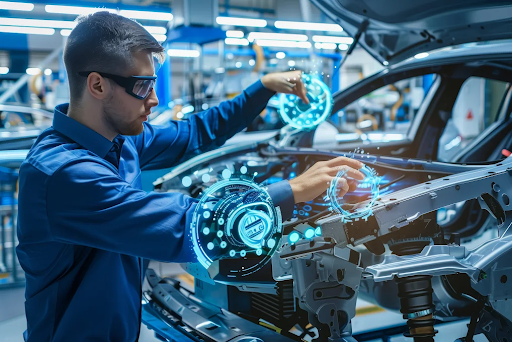
The move towards more stringent emission norms like BS6 has been a major game-changer for the Indian automobile industry. One of the most significant changes has been the increased demand for automotive engine components as companies move toward cleaner, more efficient engines. These regulations, implemented to minimize pollution caused by vehicles on the roads, not only rewrote the way automobile engines are made but also rewrote the entire supply chain for automobile engine parts in their entirety.
Understanding BS6 and Its Technical Implications :
The BS6 emission standards are regulations that are intended to reduce the emission of pollutants like nitrogen oxides and particulate matter. BS6 emission standards are more advanced in terms of engine technology and engineering skills when compared to BS4 emission standards.
This has led to:
- Increased usage of fuel injection systems rather than carburetors
- Inclusion of exhaust after-treatment systems like Diesel Particulate Filters (DPF)
- Improvement in electronic control units (ECU) for real-time monitoring
Thus, the traditional engine parts are being replaced or upgraded to fulfill these stringent needs.
Shift in Demand for Engine Components :
The implementation of BS6 has had a direct influence on the demand for different engine parts. The focus now is on high-performance engine components rather than traditional ones.
The changes that have been witnessed in the market for engine components are as follows:
- Rise in the demand for high-performance fuel systems: High-pressure fuel pumps and injectors are now a necessity
- Growth in the demand for sensor-based components: Oxygen sensors, NOx sensors, and temperature sensors are now in higher demand
- Decline in the traditional components: The traditional engine components that were a part of the older combustion systems are slowly becoming obsolete
In this ever-changing environment, the automotive engine parts market has become a quality-driven rather than a quantity-driven market with a focus on quality and durability.
Increased Focus on Material Quality and Precision :
BS6 regulations have forced manufacturers to adopt better materials and precision in the engine parts of the vehicles. The parts of the engine should be strong enough to withstand high pressure and temperatures while ensuring the efficiency of the engine.
This has led to the following changes:
- Use of heat-resistant alloys and composites
- Improvement in machining and manufacturing processes
- Increased emphasis on testing and certification
Manufacturers are investing more in research and development to comply with the new regulations and to ensure that the parts of the engine are not only efficient but also help in reducing emissions.
Impact on the Aftermarket and Spare Parts Industry :
The aftermarket sector has also changed with the implementation of BS6 regulations. The users of the vehicles have become aware of the quality of spare parts used in the vehicles.
Trends Observed:
- Preference for genuine and certified spare parts
- Increased awareness about compatibility with BS6 engines
- Growing demand for reliable suppliers who understand the needs of modern engines
This change has opened doors for organized players who can offer quality parts and technical support.
Evolving Supply Chain and Industry Adaptation :
The transition from BS6 has encouraged more collaboration within the industry. OEMs, suppliers, and distributors are working closely to ensure a smooth integration of technologies.
Some of the notable adaptations within the industry are:
- Digital inventory management to accurately track parts
- Training programs for mechanics/technicians
- Improved logistics to ensure faster availability of advanced parts
These changes have been beneficial in maintaining efficiency within the industry.
A Forward-Looking Perspective on Engine Parts Demand :
With the change in emission norms, the need for automotive engine parts will also be in line with sustainable and innovative practices. Manufacturers like TGP India are working towards not just providing quality and compliant parts to the industry, but also helping customers with technical support and sourcing services.
In the future, the amalgamation of technologies such as engine components, auto parts, car engine parts, and OEM automotive parts will play a crucial role in shaping the future of the industry. Performance, longevity, and conformance to international emission norms will continue to be the need of the hour, which will take the industry and consumers into a sustainable future.