

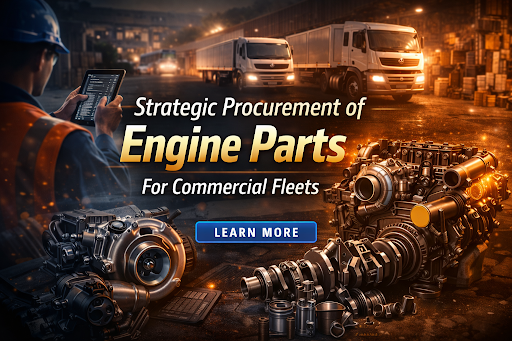
Running a commercial fleet means constant stress regarding keeping up with maintenance issues, safety concerns, and financial considerations. However, one of the crucial things that fleet management must take into account is the procurement of engine parts. A properly planned procurement system will not only help you avoid costly surprises but will also lead to improved operational results.
Today, more fleet managers are turning to planned procurement methods to make sure that they get quality products at the right price.
Understanding the Importance of Planned Procurement
Procurement is no longer about buying parts when something fails. Rather, it includes proper planning and analysis aimed at determining the best suppliers for your needs.
A strategically implemented procurement plan will enable you to:
- Reduce the downtime of vehicles
- Maintain tight control over budgets
- Have spare parts available when needed
- Optimize your entire fleet operations
In this regard, proactive fleet maintenance practices that are driven by data provide a much better chance at managing both regular maintenance procedures and any unforeseen mechanical breakdowns effectively.
Key Factors to Consider While Sourcing Components
It is important to keep in mind that not all parts are equal, and their selection requires certain considerations.
1. Quality and Certification
High-quality parts are crucial since they will provide reliability and ensure performance. It is recommended to make sure that the part meets all the necessary standards and has the appropriate certification.
2. Supplier Reliability
Reliable suppliers provide efficient logistics and guarantee consistent product quality. They also offer better deals and services over the course of time due to the built partnership.
3. Compatibility and Specifications
Each model of vehicle has its own set of demands. Mixing and matching parts that do not fit together will result in inefficiencies or mechanical problems.
4. Cost vs. Value
Although cheaper costs might sound appealing, they usually entail trade-offs. A cost-effective approach emphasizes long-term gains over short-term benefits.
Lifecycle Cost Analysis in Procurement Decisions
Although initial cost may be a determining factor, wise fleet managers consider other elements when choosing components that take into account the full cost of ownership during their lifecycle. These include durability, frequency of repairs, effect on fuel consumption, and frequency of replacement. A slightly higher investment in good quality components saves a lot of costs in the long run.
Lifecycle costing is useful in making comparisons between various suppliers as well. In addition to the initial cost of purchasing, a firm can compare the efficiency of each supplier based on their performance throughout the lifespan of the equipment.
Inventory Management for Fleet Efficiency
Maintaining the right inventory balance is essential. Overstocking ties up capital, while understocking leads to delays and operational disruptions.
Best Practices for Inventory Control:
- Analyze data for demand prediction
- Segment components according to their usage rate
- Keep adequate buffer stocks of vital spare parts
- Leverage digital tools for inventory management
Effective inventory control ensures optimal availability of essential engine parts without overstocking.
Building Strong Supplier Relationships
Procurement involves not only transactions but also building strong networks with suppliers. A close relationship with them may offer some significant benefits like access to innovative products, discounts, and effective customer support.
Benefits of Long-Term Partnerships:
- Quality control
- Rapid delivery time
- Flexible payment plans
- Technical expertise
Suppliers who are knowledgeable about your fleet needs can also help identify alternative solutions when supplies run out.
Leveraging Technology in Procurement
The adoption of technology has played an important role in improving the procurement process. The use of technology is now widely adopted in the procurement process by fleet operators through software applications.
Common Technological Tools
- Enterprise Resource Planning (ERP)
- Software for predictive maintenance
- Procurement software
- Analysis of the purchasing process
Technology makes procurement easier to understand, and it gives procurement managers insight into how procurement processes work.
The Importance of Demand Forecasting in Fleet Operations
Demand forecasting is essential for efficient procurement processes. Through analysis of past data and seasonal tendencies, as well as the pattern of vehicle use, fleet managers will be able to forecast their needs and avoid any surprises. It will decrease the chances of urgent purchases, which may not only be costly but also risky.
Good demand forecasting helps align procurement and maintenance departments’ work. With a known need, companies are able to arrange favorable conditions with providers and keep an optimum number of vehicles in storage.
Risk Management in Parts Procurement
No procurement process should be without risk mitigation strategies because supply chain interruptions, pricing changes, and counterfeit parts are some of the risks involved in the procurement process.
How to Mitigate Risks:
- Supplier diversification
- Supplier auditing
- Ensure parts authenticity
- Pricing and market monitoring
Taking proactive measures to mitigate such risks will help ensure consistency in the fleet’s operations and safeguard the assets from any unforeseen hitches.
Sustainability and Cost Optimization
Sustainability is gaining momentum in the field of fleet management. Procuring robust and energy-saving components will not only help achieve sustainable objectives but will also result in cost savings.
Sustainable Procurement Practices:
- Select enduring components that minimize wastage
- Consider purchasing refurbished components when possible
- Partner with environmentally friendly suppliers
Combining sustainability with efficient performance will enable organizations to meet current operational requirements while generating revenues.
The Role of Preventive Maintenance
Fleet procurement and maintenance are interrelated. The implementation of an effective preventive maintenance plan will prevent urgent procurements and help in planning.
Key Maintenance Strategies
- Schedule regular inspections
- Replace components before failure
- Maintain detailed service records
- Train staff on early issue detection
Procurement and maintenance can be coordinated in order for the companies to maximize resource allocation and minimize disruptions in operations.
Driving Smarter Procurement Decisions for Long-Term Gains
Strategic sourcing is not only meant for addressing present issues but is also intended for making the company prepared in dealing with challenges within the industry and ensuring its sustainability. Companies that are able to implement effective procurement strategies have greater chances of coping with problems in the industry.
A proper approach includes good sourcing, inventory management, and the use of modern technology. To assist firms in establishing an efficient procurement strategy, sourcing solutions provided by TGP India offer a comprehensive approach when sourcing top-notch components.
In order to meet industry demands, the incorporation of approaches such as fleet maintenance solutions, commercial vehicle spare parts, OEM quality components, auto parts supply chain, and heavy-duty engine components is crucial. Through proper sourcing of engine parts, a company gains a competitive edge through efficiency and reliability.