

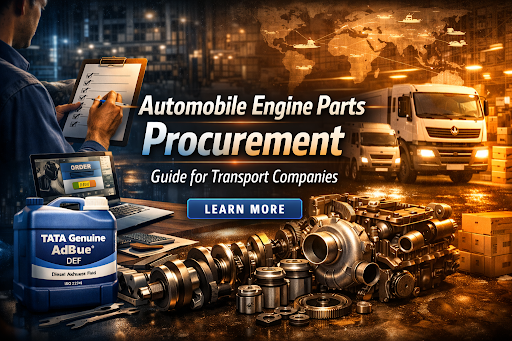
Effective management of fleets requires consideration of the kind of components that are installed in vehicles. For transport organizations, the selection of automobile engine parts becomes an important activity, whose outcomes have a direct effect on the performance and even safety of the vehicles. Proper selection will result in reduced engine wear and tear and improved performance.
Understanding Your Fleet Requirements
Each fleet is unique, and hence, the process of procurement should start with an assessment of the types of vehicles, their use, and the environment they operate in. For instance, trucks will have more robust components than light commercial vehicles.
Some considerations include:
- Mileage per day traveled on average
- The weight that the automobile is transporting
- Environmental conditions such as temperature, humidity, and dust
- Records about past maintenance and wear
Analyzing these factors, it will help transport companies determine the frequency of replacing parts.
Prioritizing Quality Over Cost
Although cost savings cannot be overlooked, going for cheaper options might prove costly in the long run. Poor-quality components are usually expected to have a limited lifespan and often necessitate constant replacement.
Examples of quality-oriented buying are:
- The use of OEM or certified components that will fit without issues
- The selection of items that come with guarantees for guaranteed satisfaction
- Standardized quality assurance in supply
A trustworthy platform like TGP India can help fleet owners acquire genuine and quality-assured components, resulting in cost savings and improved performance.
Inventory Planning and Supplier Management
Procurement processes are not restricted to the act of procurement alone. It also includes inventory management and maintenance of good supplier relationships. Failure in the planning of inventory can lead to either surplus inventory or a lack of inventory, which affects operational processes.
Some of the recommendations that could be made would include the following:
- Maintaining minimal levels of inventory of key parts
- Forecasting through the use of data to control demand
- Working with suppliers who ensure timely deliveries
In the operations process, the procurement of automobile engine parts will become essential, especially during unplanned situations where an accident occurs. The use of an efficient supply chain network will restore the automobiles to full functionality.
Evaluating Supplier Credibility
Selecting the right supplier is just as important as selecting the right components. Transport companies should search for suppliers that are dependable and possess a variety of goods. The suppliers should provide top-notch after-sales services as well.
These suppliers should:
- Have extensive experience in the field
- Offer clear pricing and paperwork
- Provide a hassle-free return policy
- Offer technical assistance
Companies like TGP India make the task of buying components easier due to their catalogs and technical assistance.
Leveraging Technology in Procurement
Technology has made the process of procurement more convenient for transport companies. Online portals can help organizations view catalogs, compare prices, and track orders.
Advantages of using digital procurement systems:
- Rapid decision-making
- Decreased human error
- Improved tracking of inventory and expenses
- Effective interaction with suppliers
The inclusion of such solutions in the procurement process guarantees efficient operation and effective control over the business.
Driving Long-Term Efficiency Through Smart Procurement
Through organizing their engine part procurement process, there is room for improving efficiency and reducing possible problems associated with this procedure. In addition, organizations that focus on the aspects of quality and planning will have a better chance of handling any arising problems within the corporate world.
TGP India is one of the reliable service providers for procurement that provides genuine parts and technical assistance based on the needs of fleets. By optimizing the procurement strategy based on contemporary approaches, organizations will benefit from efficient procurement and sustainable growth.
Today, it is increasingly important to incorporate the use of fleet management solutions and other tools into business activities, such as fleet maintenance, spare parts procurement, commercial vehicle parts procurement, and heavy-duty engine parts procurement.