


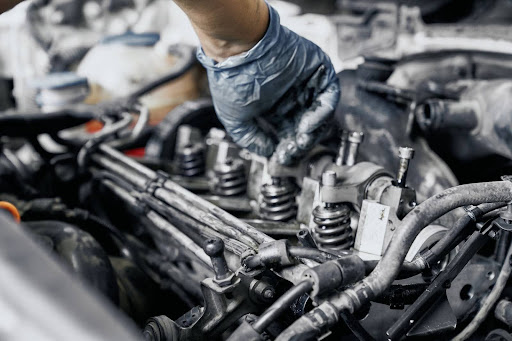
Role of Engine Oil in Protecting Automobile Engine Parts

by | Feb 12, 2026 | Blog

An automobile engine is a complex system consisting of hundreds of components that work at a high speed in extreme heat and pressure conditions. At the heart of this complex system is engine oil, which works tirelessly to perform several critical tasks that make automobile engines reliable and efficient. From our point of view as lubrication experts, engine oil is more than a consumable item; it is a protective barrier that shields automobile engine parts from wear, deposits, and mechanical stress from the very first ignition.

Why Engine Protection Begins with Lubrication

Each time an engine starts, metal parts come into contact with each other before the engine reaches its optimal operating temperature. Even this initial stage can cause permanent damage to the engine if it is not properly lubricated. Engine oil creates a thin yet resilient barrier between moving engine parts to prevent direct contact between metal surfaces. This protective barrier is particularly important for engine parts such as pistons, crankshafts, camshafts, and bearings, which are constantly subjected to friction.

Engine oil does more than just prevent friction between engine parts. It also helps to stabilize engine performance. A well-lubricated engine runs smoother, responds better under load, and maintains consistent power delivery, especially during long drives or stop-and-go traffic conditions.

Managing Heat Inside the Engine

Combustion produces very high temperatures, and although the cooling system is responsible for getting rid of some of this heat, engine oil is just as important. Oil absorbs heat as it moves through the engine and automobile ries it away from areas that coolant can not reach by itself.

This function of oil helps to:

  • Avoid the overheating of internal parts.
  • Keep the oil viscosity stable when the temperature rises.
  • Reduce thermal stress that can deform or weaken parts

When engine oil is working properly, the internal components are basically protected against excessive heating, even when the engine is heavily loaded.

Keeping the Engine Clean from Within

Various contaminants, like automobile bon deposits, soot, and tiny metal particles, are naturally formed inside the engine. If these contaminants are ignored, they will eventually accumulate on internal surfaces and limit the movement of parts. The latest engine oils contain detergents and dispersants that continuously clean the oil by catching and holding the impurities until an oil change gets rid of them.

This cleaning from inside plays a major role in safeguarding those automobile engine parts that depend on the clearance between the parts to be very accurate. Besides, properly sealed engine parts can achieve better sealing, and the engine will serve its lifespan without a drop in performance.

How Engine Oil Supports Sealing and Power Consistency

The role of engine oil extends beyond lubrication and cleanliness as it contributes significantly to engine sealing and power output stabilization. The stable oil film assists in filling the tiny gaps between the moving parts, particularly at the piston rings and cylinder walls. This not only makes the combustion more efficient due to better compression but also saves energy, which is then reflected in the engine’s reliable performance over time.

Some of the major ways in which engine oil helps sealing and power balance are:

  • Enabling piston rings to form an effective seal against the cylinder walls
  • Reducing blow-by, where unburnt gases escape into the crankcase
  • Facilitating uniform combustion for enhanced engine response
  • Decreasing vibration and noise caused by the irregular movement of components

When engine oil does its job well, it helps in maintaining the smooth operation of various key systems, which helps to ensure engine reliability without putting additional stress on the engine’s internal components.

Protection Against Corrosion and Oxidation

Corrosion and oxidation can be major problems leading to the deterioration of an engine’s internal components. When a vehicle is not used regularly or is only driven for short distances, it’s prone to collect moisture, fuel residues, and air, which is the main reason for corrosion. Engine oil is capable of forming a layer on metal surfaces, which prevents the formation of rust and the metals from reacting chemically.

Additionally, high-quality oils resist oxidation, which prevents oil thickening and sludge formation. With such a high level of resistance, oil can continue to run inside the engine without any problem and reach all the parts that are most vulnerable without any restriction.

Supporting Engine Longevity and Efficiency

Engine wear is a gradual process, but the right lubrication strategy can slow it significantly. Engine oil helps to extend the life of major systems by reducing friction, controlling deposits, and stabilizing operating temperatures.

Engines that are kept in good condition by regular and timely oil changes and monitoring will definitely run efficiently. Lower friction means less energy is wasted inside the engine, which in turn makes the engine run smoothly and saves more fuel over time. Regular oil monitoring and timely replacement are, therefore, key practices in responsible vehicle ownership.

Understanding Oil Performance Across Driving Conditions

Different conditions demand different performance levels from engine oils. Congested city traffic, long highway cruising, automobile carrying heavy loads, and extreme temperatures are all very different scenarios that affect oil performance. Therefore, the quality, formulation, and consistency of the oil become just as important as the intervals at which the oil is changed.

Engines subjected to:

  • Short, frequently repeated trips create a strong need for control
  • Thermal stability is the requirement of high-speed driving
  • Wear resistance enhancement for heavy-duty usage

Choosing the oil that fits the actual usage will result in the vehicle getting the right amount of protection, whatever the changes in conditions.

A Long-Term View on Engine Automobile

The essential function of engine oil is to prevent damage rather than fix it. It works continuously in the background, protecting surfaces that are never visible but always essential. If the engine oil does its role efficiently, the automobile engine parts stay protected, in balance, and capable of providing reliable performance for many years.

From our experience in providing lubrication solutions, we believe informed engine care begins with understanding how oil works inside the engine and why quality matters. By concentrating on good lubrication habits and dependable formulations, backed up by well-known brands such as TGP India, the vehicle owners are guaranteed not only performance but also gaining useful knowledge about engine oil, automotive lubricants, automobile engine maintenance, synthetic engine oil, and oil change intervals that are instrumental in ensuring the long life of the engine.

All Blogs
Blog
When it comes to upgrading or adding accessories to a vehicle, one needs to remember that safety and compliance should always be a top concern. This is where Tata Motors' genuine accessories come in, which promise a guarantee that all parts and accessories are compliant with strict regulatory requirements and have been tested for durability, compatibility, and performance. Automotive accessories, ranging from seat covers to electrical accessories, need to conform to industry norms set on the quality of materials used, fire resistance, and environmental friendliness. While such accessories may appear to be inexpensive, non-compliant accessories may cause problems in the long run.

Key Safety Standards to Look For : 

Knowing and understanding compliance standards is an important aspect of ensuring that a vehicle owner or fleet operator is able to make informed decisions regarding their vehicles. A reliable platform such as TGP India provides valuable information on where to get automotive parts that comply with strict regulatory standards. Some of the key safety standards to look out for include:
  • Material Quality Certification: This process ensures that the quality of the materials used for the accessories is good and non-toxic.
  • Fit and Compatibility Testing: This process ensures that the parts fit perfectly with the chosen models of the vehicles.
  • Electrical Safety Checks: This process prevents short circuits and electrical damage.
  • Environmental Compliance: This process ensures that the company complies with environmental regulations.
It is not just the technical specifications that matter here; it is the direct implications for the safety of the people and the goods being transported.

The Role of Authentic Sourcing : 

It is a known fact that sourcing the right parts from the right people plays a vital role in the whole process of compliance. Tata Motors' genuine accessories are sourced from authorized dealerships that follow a strict quality control policy. Platforms such as TGP India help facilitate the process and provide the right parts for the right vehicles. Additionally, proper installation is also equally important. Even a certified accessory may not conform to safety standards if it is not installed properly. Hence, proper installation is strongly recommended.

Ensuring Long-Term Reliability Through Smart Choices : 

Compliance is not a one-time activity; rather, it is a process that needs to be continued in order to meet safety and performance standards. Therefore, by opting for Tata Motors' genuine accessories, vehicle owners can be assured of quality, lower maintenance risks, and better resale value. As the industry continues to evolve, understanding concepts like automotive safety standards, vehicle compliance regulations, OEM car accessories, and certified auto parts in India can help vehicle owners make more informed and responsible decisions while keeping safety at the forefront.
Blog
For transport businesses, vehicle uptime is immediately linked to profitability. Every single hour that the vehicle is out of service means loss of income and delayed business operations. This is where Tata genuine parts play a crucial role, as they are able to provide support to vehicle operators in their quest to maintain performance and minimize the risk of vehicle failure.

Built for Precision and Compatibility : 

One of the major reasons why genuine parts are able to provide support to transport organizations is their precision engineering. Unlike other parts, genuine parts are built to precise vehicle specifications. This means that there is:
  • Seamless fitting and installation
  • Minimization of wear and tear on other connected parts
  • Perfect performance of the vehicle
When the parts perfectly fit the original system, the likelihood of malfunction is significantly low. This reduces the need for frequent repairs and keeps the vehicle running for longer periods.

Reduced Breakdown Frequency : 

Frequent breakdowns may interfere with logistics schedules and affect business credibility. Using quality parts ensures that the vehicle functions well even in adverse weather and driving conditions, such as transporting goods over long distances. During the middle of operations, using Tata genuine parts offers several advantages, including:
  • Resistance to heat and friction
  • Long intervals between services
  • Efficient performance of the engine
The above advantages are crucial in reducing the frequency of breakdowns, enabling transport businesses to deliver goods as scheduled.

Better Lifecycle Value : 

Although genuine parts may be more expensive, their life cycle offers more value to the business. The parts are more durable and less likely to need frequent replacements. The key advantages of using genuine parts, as opposed to non-genuine ones, are as follows:
  • Lower maintenance costs
  • Lower labor costs
  • Higher resale value
Transport businesses are usually run on low margins, and the avoidance of recurring expenses can make a huge difference in the profitability of the business.

Improved Safety and Compliance : 

While vehicle uptime mainly focuses on the movement of vehicles, it also includes safety and compliance. Low-quality vehicle parts may cause failure, thereby compromising the safety and security of the vehicle. Using genuine vehicle parts provides an additional level of reliability. This provides many advantages to transport businesses, such as:
  • Improved compliance with transport regulations
  • Improved safety while driving
  • Avoiding penalties and operational disruptions
This provides an additional level of reliability to vehicle uptime.

Availability and Support Network : 

Another major factor that provides vehicle uptime comes from the availability and support network. A strong support network provides easy access to vehicle parts. With the availability and support network, transport businesses can:
  • Procure vehicle parts in case of emergencies
  • Reduce waiting time for vehicle parts
  • Ensure consistent performance of the fleet
This accessibility is very important in ensuring that idle time is reduced to a bare minimum.

Keeping Fleets Moving Without Disruption : 

For a competitive and dynamic industry like the transport business, consistency and reliability are the key factors that help businesses run smoothly and gain the confidence of their clients and customers. Thus, the need for consistent and reliable parts arises for businesses that look forward to a smoother and more efficient running of their operations with the help of Tata genuine parts. From the perspective of TGP India, the focus is always on helping businesses make the right decisions about the maintenance and use of parts for their operations. When combined with proper and effective fleet management strategies and techniques, the use of quality parts is a great advantage for businesses that look forward to the long-term and stable running of their operations with the help of options like commercial vehicle spare parts, truck maintenance solutions, fleet management systems, heavy-duty engine parts, and OEM quality auto parts.
Blog
The move towards more stringent emission norms like BS6 has been a major game-changer for the Indian automobile industry. One of the most significant changes has been the increased demand for automotive engine components as companies move toward cleaner, more efficient engines. These regulations, implemented to minimize pollution caused by vehicles on the roads, not only rewrote the way automobile engines are made but also rewrote the entire supply chain for automobile engine parts in their entirety.

Understanding BS6 and Its Technical Implications : 

The BS6 emission standards are regulations that are intended to reduce the emission of pollutants like nitrogen oxides and particulate matter. BS6 emission standards are more advanced in terms of engine technology and engineering skills when compared to BS4 emission standards. This has led to:
  • Increased usage of fuel injection systems rather than carburetors
  • Inclusion of exhaust after-treatment systems like Diesel Particulate Filters (DPF)
  • Improvement in electronic control units (ECU) for real-time monitoring
Thus, the traditional engine parts are being replaced or upgraded to fulfill these stringent needs.

Shift in Demand for Engine Components : 

The implementation of BS6 has had a direct influence on the demand for different engine parts. The focus now is on high-performance engine components rather than traditional ones. The changes that have been witnessed in the market for engine components are as follows:
  • Rise in the demand for high-performance fuel systems: High-pressure fuel pumps and injectors are now a necessity
  • Growth in the demand for sensor-based components: Oxygen sensors, NOx sensors, and temperature sensors are now in higher demand
  • Decline in the traditional components: The traditional engine components that were a part of the older combustion systems are slowly becoming obsolete
In this ever-changing environment, the automotive engine parts market has become a quality-driven rather than a quantity-driven market with a focus on quality and durability.

Increased Focus on Material Quality and Precision : 

BS6 regulations have forced manufacturers to adopt better materials and precision in the engine parts of the vehicles. The parts of the engine should be strong enough to withstand high pressure and temperatures while ensuring the efficiency of the engine. This has led to the following changes:
  • Use of heat-resistant alloys and composites
  • Improvement in machining and manufacturing processes
  • Increased emphasis on testing and certification
Manufacturers are investing more in research and development to comply with the new regulations and to ensure that the parts of the engine are not only efficient but also help in reducing emissions.

Impact on the Aftermarket and Spare Parts Industry : 

The aftermarket sector has also changed with the implementation of BS6 regulations. The users of the vehicles have become aware of the quality of spare parts used in the vehicles. Trends Observed:
  • Preference for genuine and certified spare parts
  • Increased awareness about compatibility with BS6 engines
  • Growing demand for reliable suppliers who understand the needs of modern engines
This change has opened doors for organized players who can offer quality parts and technical support.

Evolving Supply Chain and Industry Adaptation : 

The transition from BS6 has encouraged more collaboration within the industry. OEMs, suppliers, and distributors are working closely to ensure a smooth integration of technologies. Some of the notable adaptations within the industry are:
  • Digital inventory management to accurately track parts
  • Training programs for mechanics/technicians
  • Improved logistics to ensure faster availability of advanced parts
These changes have been beneficial in maintaining efficiency within the industry.

A Forward-Looking Perspective on Engine Parts Demand : 

With the change in emission norms, the need for automotive engine parts will also be in line with sustainable and innovative practices. Manufacturers like TGP India are working towards not just providing quality and compliant parts to the industry, but also helping customers with technical support and sourcing services. In the future, the amalgamation of technologies such as engine components, auto parts, car engine parts, and OEM automotive parts will play a crucial role in shaping the future of the industry. Performance, longevity, and conformance to international emission norms will continue to be the need of the hour, which will take the industry and consumers into a sustainable future.
Load More