

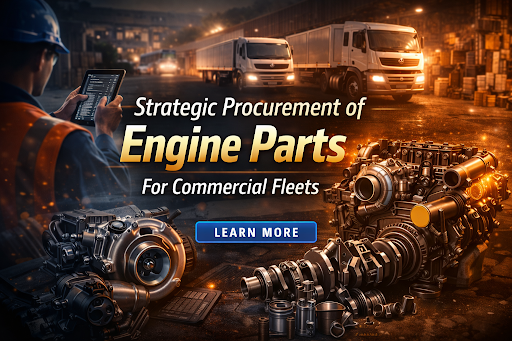
Strategic Procurement of Engine Parts for Commercial Fleets

by | Apr 14, 2026 | Blog | 0 comments

Running a commercial fleet means constant stress regarding keeping up with maintenance issues, safety concerns, and financial considerations. However, one of the crucial things that fleet management must take into account is the procurement of engine parts. A properly planned procurement system will not only help you avoid costly surprises but will also lead to improved operational results.

Today, more fleet managers are turning to planned procurement methods to make sure that they get quality products at the right price.

Understanding the Importance of Planned Procurement

Procurement is no longer about buying parts when something fails. Rather, it includes proper planning and analysis aimed at determining the best suppliers for your needs.

A strategically implemented procurement plan will enable you to:

  • Reduce the downtime of vehicles
  • Maintain tight control over budgets
  • Have spare parts available when needed
  • Optimize your entire fleet operations

In this regard, proactive fleet maintenance practices that are driven by data provide a much better chance at managing both regular maintenance procedures and any unforeseen mechanical breakdowns effectively.

Key Factors to Consider While Sourcing Components

It is important to keep in mind that not all parts are equal, and their selection requires certain considerations.

1. Quality and Certification

High-quality parts are crucial since they will provide reliability and ensure performance. It is recommended to make sure that the part meets all the necessary standards and has the appropriate certification.

2. Supplier Reliability

Reliable suppliers provide efficient logistics and guarantee consistent product quality. They also offer better deals and services over the course of time due to the built partnership.

3. Compatibility and Specifications

Each model of vehicle has its own set of demands. Mixing and matching parts that do not fit together will result in inefficiencies or mechanical problems.

4. Cost vs. Value

Although cheaper costs might sound appealing, they usually entail trade-offs. A cost-effective approach emphasizes long-term gains over short-term benefits.

Lifecycle Cost Analysis in Procurement Decisions

Although initial cost may be a determining factor, wise fleet managers consider other elements when choosing components that take into account the full cost of ownership during their lifecycle. These include durability, frequency of repairs, effect on fuel consumption, and frequency of replacement. A slightly higher investment in good quality components saves a lot of costs in the long run.

Lifecycle costing is useful in making comparisons between various suppliers as well. In addition to the initial cost of purchasing, a firm can compare the efficiency of each supplier based on their performance throughout the lifespan of the equipment.

Inventory Management for Fleet Efficiency

Maintaining the right inventory balance is essential. Overstocking ties up capital, while understocking leads to delays and operational disruptions.

Best Practices for Inventory Control:

  • Analyze data for demand prediction
  • Segment components according to their usage rate
  • Keep adequate buffer stocks of vital spare parts
  • Leverage digital tools for inventory management

Effective inventory control ensures optimal availability of essential engine parts without overstocking.

Building Strong Supplier Relationships

Procurement involves not only transactions but also building strong networks with suppliers. A close relationship with them may offer some significant benefits like access to innovative products, discounts, and effective customer support.

Benefits of Long-Term Partnerships:

  • Quality control
  • Rapid delivery time
  • Flexible payment plans
  • Technical expertise

Suppliers who are knowledgeable about your fleet needs can also help identify alternative solutions when supplies run out.

Leveraging Technology in Procurement

The adoption of technology has played an important role in improving the procurement process. The use of technology is now widely adopted in the procurement process by fleet operators through software applications.

Common Technological Tools

Technology makes procurement easier to understand, and it gives procurement managers insight into how procurement processes work.

The Importance of Demand Forecasting in Fleet Operations

Demand forecasting is essential for efficient procurement processes. Through analysis of past data and seasonal tendencies, as well as the pattern of vehicle use, fleet managers will be able to forecast their needs and avoid any surprises. It will decrease the chances of urgent purchases, which may not only be costly but also risky.

Good demand forecasting helps align procurement and maintenance departments’ work. With a known need, companies are able to arrange favorable conditions with providers and keep an optimum number of vehicles in storage.

Risk Management in Parts Procurement

No procurement process should be without risk mitigation strategies because supply chain interruptions, pricing changes, and counterfeit parts are some of the risks involved in the procurement process.

How to Mitigate Risks:

  • Supplier diversification
  • Supplier auditing
  • Ensure parts authenticity
  • Pricing and market monitoring

Taking proactive measures to mitigate such risks will help ensure consistency in the fleet’s operations and safeguard the assets from any unforeseen hitches.

Sustainability and Cost Optimization

Sustainability is gaining momentum in the field of fleet management. Procuring robust and energy-saving components will not only help achieve sustainable objectives but will also result in cost savings.

Sustainable Procurement Practices:

  • Select enduring components that minimize wastage
  • Consider purchasing refurbished components when possible
  • Partner with environmentally friendly suppliers

Combining sustainability with efficient performance will enable organizations to meet current operational requirements while generating revenues.

The Role of Preventive Maintenance

Fleet procurement and maintenance are interrelated. The implementation of an effective preventive maintenance plan will prevent urgent procurements and help in planning.

Key Maintenance Strategies

  • Schedule regular inspections
  • Replace components before failure
  • Maintain detailed service records
  • Train staff on early issue detection

Procurement and maintenance can be coordinated in order for the companies to maximize resource allocation and minimize disruptions in operations.

Driving Smarter Procurement Decisions for Long-Term Gains

Strategic sourcing is not only meant for addressing present issues but is also intended for making the company prepared in dealing with challenges within the industry and ensuring its sustainability. Companies that are able to implement effective procurement strategies have greater chances of coping with problems in the industry.

A proper approach includes good sourcing, inventory management, and the use of modern technology. To assist firms in establishing an efficient procurement strategy, sourcing solutions provided by TGP India offer a comprehensive approach when sourcing top-notch components.

In order to meet industry demands, the incorporation of approaches such as fleet maintenance solutions, commercial vehicle spare parts, OEM quality components, auto parts supply chain, and heavy-duty engine components is crucial. Through proper sourcing of engine parts, a company gains a competitive edge through efficiency and reliability.
All Blogs
Blog
Effective management of fleets requires consideration of the kind of components that are installed in vehicles. For transport organizations, the selection of automobile engine parts becomes an important activity, whose outcomes have a direct effect on the performance and even safety of the vehicles. Proper selection will result in reduced engine wear and tear and improved performance.

Understanding Your Fleet Requirements

Each fleet is unique, and hence, the process of procurement should start with an assessment of the types of vehicles, their use, and the environment they operate in. For instance, trucks will have more robust components than light commercial vehicles. Some considerations include:
  • Mileage per day traveled on average
  • The weight that the automobile is transporting
  • Environmental conditions such as temperature, humidity, and dust
  • Records about past maintenance and wear
Analyzing these factors, it will help transport companies determine the frequency of replacing parts.

Prioritizing Quality Over Cost

Although cost savings cannot be overlooked, going for cheaper options might prove costly in the long run. Poor-quality components are usually expected to have a limited lifespan and often necessitate constant replacement. Examples of quality-oriented buying are:
  • The use of OEM or certified components that will fit without issues
  • The selection of items that come with guarantees for guaranteed satisfaction
  • Standardized quality assurance in supply
A trustworthy platform like TGP India can help fleet owners acquire genuine and quality-assured components, resulting in cost savings and improved performance.

Inventory Planning and Supplier Management

Procurement processes are not restricted to the act of procurement alone. It also includes inventory management and maintenance of good supplier relationships. Failure in the planning of inventory can lead to either surplus inventory or a lack of inventory, which affects operational processes. Some of the recommendations that could be made would include the following:
  • Maintaining minimal levels of inventory of key parts
  • Forecasting through the use of data to control demand
  • Working with suppliers who ensure timely deliveries
In the operations process, the procurement of automobile engine parts will become essential, especially during unplanned situations where an accident occurs. The use of an efficient supply chain network will restore the automobiles to full functionality.

Evaluating Supplier Credibility

Selecting the right supplier is just as important as selecting the right components. Transport companies should search for suppliers that are dependable and possess a variety of goods. The suppliers should provide top-notch after-sales services as well. These suppliers should:
  • Have extensive experience in the field
  • Offer clear pricing and paperwork
  • Provide a hassle-free return policy
  • Offer technical assistance
Companies like TGP India make the task of buying components easier due to their catalogs and technical assistance.

Leveraging Technology in Procurement

Technology has made the process of procurement more convenient for transport companies. Online portals can help organizations view catalogs, compare prices, and track orders. Advantages of using digital procurement systems:
  • Rapid decision-making
  • Decreased human error
  • Improved tracking of inventory and expenses
  • Effective interaction with suppliers
The inclusion of such solutions in the procurement process guarantees efficient operation and effective control over the business.

Driving Long-Term Efficiency Through Smart Procurement

Through organizing their engine part procurement process, there is room for improving efficiency and reducing possible problems associated with this procedure. In addition, organizations that focus on the aspects of quality and planning will have a better chance of handling any arising problems within the corporate world. TGP India is one of the reliable service providers for procurement that provides genuine parts and technical assistance based on the needs of fleets. By optimizing the procurement strategy based on contemporary approaches, organizations will benefit from efficient procurement and sustainable growth. Today, it is increasingly important to incorporate the use of fleet management solutions and other tools into business activities, such as fleet maintenance, spare parts procurement, commercial vehicle parts procurement, and heavy-duty engine parts procurement.
Blog
The growing need for automobiles that are environmentally friendly and efficient commercially has led to an increased need for DEF in India. That is why establishing yourself as a Tata Genuine Def Dealership could become a financially rewarding venture to enter into the automobile supply chain. Learning the details regarding the process, requirements, and expectations can be helpful when you decide to enter this field.

Understanding the Role of DEF in Modern Vehicles

Diesel Exhaust Fluid (DEF) acts as a catalyst in the reduction of exhaust emissions from diesel engines. In Selective Catalytic Reduction (SCR) technology, DEF is employed to transform nitrogen oxides into nitrogen and water vapor, rendering them harmless. Since the stringent BS6 emission norms have been implemented, DEF has become indispensable for fleet operators. As a dealership, this will mean a constant demand, particularly in the logistics, transport, and construction sectors, where commercial vehicles are employed regularly.

Eligibility and Basic Requirements

Before submission of your application, it would be necessary to determine if you qualify for the minimum requirements that an authorized dealership is supposed to meet. Although minimum requirements may differ, most candidates should have:
  • A registered company entity
  • Sufficient storage and management of DEF
  • Basic understanding of automotive products
  • Sound financial standing to operate the dealership
  • Distributive abilities in a designated geographical area
Having previous experience with auto parts or lubricant sales may prove advantageous.

Application and Approval Process

In most instances, the journey from becoming a Tata Genuine Def Dealership includes an organized onboarding process. This can be facilitated by organizations like TGP India. The following steps are involved in this process:
  • Initial Inquiry: Make your intent known via formal channels or partner portals.
  • Documentation Submission: Submit details regarding the registration of your company, financials, and infrastructure-related documents.
  • Evaluations: The organization assesses your capability, geographical location, and market coverage.
  • Approval & Agreement: After approval, you sign a formal dealership agreement with the company.
  • Onboarding Support: Assistance and training on products and operations are offered.
In the case of TGP India, for instance, transparency and systematic onboarding procedures are crucial to ensure that you are well-equipped before beginning operations.

Infrastructure and Operational Setup

The arrangement of the dealership will not be limited to stocking items. Proper DEF storage is essential to ensure its quality. This includes:
  • Contamination-free storage tanks or containers
  • Temperature-controlled facilities (where possible)
  • Effective logistical arrangement for prompt deliveries
  • Minimum level of testing knowledge or quality checking
Additionally, managing stock and providing an uninterrupted flow of supplies to clients plays a vital role in establishing trust and fostering business relations.

Support and Training from Authorized Partners

There is one significant advantage that can be gained by partnering with such reputable distributors as TGP India. It consists of:
  • Product training and technical knowledge
  • Marketing and branding assistance
  • Supply chain management support
  • Access to genuine products and consistent inventory
Such assistance enables dealers to get past their difficulties more easily and run their businesses successfully.

Market Opportunities and Growth Potential

There are opportunities in the DEF market in India because of the need to meet compliance standards, as well as the use of cars. As a dealer, you will be able to sell DEF to:
  • Fleet operators
  • Transport companies
  • Workshops and service centers
  • Retail automotive outlets
Through the proper approach, dealers can grow their businesses through the expansion of sales channels and selling other automotive products along with DEF.

Building a Sustainable Dealership with the Right Approach

To be a Tata Genuine Def Dealership, it is not enough to fulfill some minimum requirements; one should ensure consistency in delivering a high level of service, reliability, and integrity. To become successful in this business, it is important to stay updated with the latest amendments to the standards of emissions, understand the demands of the customers, and provide them with genuine products. If one aims at being successful within this niche, then partnering with an expert in this field, such as TGP India, might be a good choice. They offer well-structured and efficient services that will assist in establishing a new dealership successfully. In the long term, using operational discipline alongside market knowledge will assist you in developing a sustainable and scalable company in the emerging DEF market segment.
Blog
In terms of selling your vehicle, everything counts. Maintenance history and even the general state of the vehicle say a lot about its past. There is also one less discussed aspect that plays a vital role in determining the vehicle's resale value: using Tata Motors' genuine accessories. Accessories not only improve the visual and functional characteristics of your vehicle but also guarantee the buyer that he/she has received a quality and reliable vehicle.

The Link Between Accessories and Resale Value

Resale value for vehicles is based on the factor of reliability. People look for vehicles that have reliability features and do not require much money spent on them immediately. Original equipment contributes greatly to this since these items are created especially for the particular model of the vehicle. The difference between the original equipment and the aftermarket is in its approval. Only original equipment meets all the requirements of a certain vehicle and retains its high level of quality.

Why Genuine Accessories Make a Difference

Not all accessories are the same. Although low-cost accessories may appear attractive at first glance, they frequently fall short when it comes to their functionality and durability. Authentic accessories have multiple benefits over cheap accessories, including:
  • Proper Fit and Design: Accessories made specifically for the vehicle, and therefore perfectly fitting and working.
  • Improved Safety: For example, accessories like lighting equipment and sensors ensure increased safety during driving.
  • Increased Longevity: High-quality materials mean that the product will last much longer.
  • Protection and Warranty: Some accessories are protected by warranties offered by the manufacturer.
All of these aspects can be beneficial both now and when selling the vehicle later, since they will make the vehicle more valuable.

First Impressions Matter

The first time a prospective buyer views your vehicle, appearance matters a great deal. Alloy wheels, chrome accents, seat covers, and audio system enhancements are accessories that can boost your vehicle's appearance. An accessorized vehicle creates an image of vehicles. The very fact that you have equipped your vehicle with additional accessories shows that you have spent money on it. If the interior is clean, the accessories do not show any scratches, and the accessories are installed correctly, it leaves a good impression.

Functional Upgrades That Add Value

Apart from adding to the aesthetics of the vehicle, certain functional upgrades will add more value to the vehicle when selling it on the secondary market. These may include:
  • An advanced infotainment system
  • Parking sensors and rear-view camera
  • Roof racks and storage solutions
  • Floor mats and seat protection covers
All of these accessories increase the utility value of the vehicle and thus enhance its overall market value.

Maintaining Originality Builds Trust

Another issue that most consumers worry about is whether there are any modifications that might have been done to a vehicle. After-market modifications could sometimes pose potential dangers, particularly when these are not well-installed or are incompatible. When using Tata Motors' genuine accessories, the buyer would be assured that their vehicle is still in good condition and would not undergo any changes that may affect its operation. This is because all the accessories used in Tata Motors have been approved by the manufacturer, and thus, they are completely compatible with the vehicle.

Better Maintenance and Service Compatibility

Another critical benefit provided by genuine accessories relates to their compatibility with the authorized maintenance services. In case a vehicle has been designed with the help of genuine parts, the process of its servicing will be much simpler and more efficient. A service provider will be able to recognize genuine parts much more easily, thus reducing the likelihood of mistakes and mismatches. Additionally, good maintenance records can be an essential bonus when selling a vehicle later on. Moreover, one of the advantages of the TGP India platform is that it provides easy access to a wide selection of genuine accessories and spare parts, helping owners to ensure consistent maintenance.

Higher Perceived Value in the Used Vehicle Market

The resale value of a vehicle depends not only on its actual state but also on its perceived value. Generally speaking, people prefer vehicles equipped with genuine accessories because of such benefits as:
  • Fewer requirements for additional adjustments
  • Offer added comfort and convenience
  • Evidence of vehicle maintenance.
This added value can help you sell your vehicle faster and get the best price possible.

Avoiding Hidden Costs for Buyers

A buyer will benefit from buying a vehicle with authentic accessories since he or she will be guaranteed the reliability of the accessories without having to bother replacing poor-quality ones or encountering problems of compatibility. Feeling safe when choosing between different vehicles in the same category may actually become one of the factors influencing the buyer.

Small Details That Make a Big Impact

Sometimes, however, it is the little additions that make all the difference. Items such as seat covers, mud guards, sun shades, and other accessories may not mean much by themselves, but their presence does make a statement. This is an indication that the owner of the vehicle has put some thought into keeping the vehicle maintained and looking good. As time goes by, it will definitely have some bearing on the resale price.

A Smart Investment for Long-Term Gains

Making smart investments by buying authentic accessories is not only beneficial for the present but also a future-oriented process. Although the initial investment is relatively high compared to after-market items, its results will compensate for that. Those people who consider quality above saving money will have an upper hand during the time of selling their vehicle.

Making the Right Choice for Your Vehicle’s Future

Selecting suitable accessories could play an important role in enhancing the performance of your vehicle during its entire lifetime. Choosing Tata Motors' genuine accessories would be a great way to ensure that you keep your vehicle reliable, good-looking, and up to the manufacturer's requirements. This will not only provide you with a more pleasant ride experience but will also increase your bargaining power when selling your vehicle. If you prefer taking your vehicle by using trustworthy products, then TGP India should be considered. You can access authentic parts and accessories, making sure that you make the best decision possible that will help you save money in the long run. Using high-quality accessories along with following vehicle tips for your vehicle, like regular servicing, using OEM vehicle accessories, genuine spare parts, automotive accessories India, and vehicle maintenance tips, will help you increase its resale value.
Load More